As an Amazon Associate I earn from qualifying purchases.
Updated November 2026
This yoga mat thickness guide walks you through how mat depth affects cushioning, stability and comfort, so you can choose a thickness that suits your practice. Most standard mats fall between about 3 mm and 6 mm, and the right number depends on your joints, your balance and the kind of poses you do most. By the end, you will know which range fits you and how to test it before you commit.
Why Thickness Matters More Than Most People Think
Thickness controls two things that pull in opposite directions: cushioning and stability. A thicker mat compresses more under your knees, wrists and hips, which many practitioners find more comfortable on hard floors. A thinner mat sits closer to the ground, so you feel the floor more clearly, and that connection often helps with balance poses and with keeping your feet, hands and shins grounded. Neither is better in general. The question is which trade-off suits your body and your routine. Manufacturers typically list thickness in millimeters, and that number is the starting point for comparing options.
Shopping for one? See our guide: Sewing Pattern Yoga Mat Bag: 5 Best Options for Home Crafters (2026).
Match Thickness to Your Practice Style
Start by thinking about what you do most often. Your practice style is a better guide than any single product description.
- Standing and balance-focused flow: Thinner mats, roughly 1.5 mm to 3 mm, keep you close to the floor and make it easier to feel stable through standing poses.
- General home practice: Mats in the 4 mm to 5 mm range are a common middle ground, offering noticeable cushioning without making balance poses feel unsteady.
- Restorative, floor-heavy or Pilates-style work: Thicker mats, often 6 mm and up, support knees, hips and spine during long stretches and lying-down work.
- Travel: Thin mats are lighter and roll up smaller, which matters if you carry your mat to class.
Check Your Joints and Floor Surface
Your floor changes how much thickness you need. A hardwood or concrete floor gives you almost no give, so a little extra cushion can make kneeling poses more comfortable. Carpet or a thick rug already adds some softness, and a very thick mat on top of it can feel unstable. If you have sensitive knees, wrists or elbows, a thicker mat may reduce pressure during kneeling and plank variations. If you have a joint condition or recent injury, check with your doctor or a physical therapist before changing your setup, and ask which thickness suits your situation.
Compare Thickness Options Side by Side
This table summarizes common ranges and typical uses. Actual feel varies by material, so treat it as a starting point.
| Thickness | Typical feel | Best suited for |
|---|---|---|
| 1.5 mm to 3 mm | Firm, close to floor, lightweight | Balance work, travel, studio flow |
| 4 mm to 5 mm | Balanced cushion and stability | Everyday home practice, mixed styles |
| 6 mm and up | Plush, more padding | Restorative, Pilates, sensitive knees |
How to Test a Mat Before You Commit
Specs only tell you so much, so run a quick check if you can. Many studios and shops let you try mats, and you can also test at home using items you already own.
- Kneel on the mat for about 30 seconds and notice whether your knees feel supported or sink too much.
- Stand in tree pose on each leg. If you wobble noticeably more than usual, the mat may be too thick for balance work.
- Lie on your back and check whether the mat still feels firm enough for a supported bridge or shoulder stand.
- Fold the mat in half and notice how easily it lies flat again, which hints at how it will hold up in your bag.
Common Mistakes to Avoid
- Buying the thickest mat by default. Extra cushion can reduce stability in standing poses.
- Ignoring your floor. A thick mat on soft carpet can feel unsteady.
- Choosing based only on looks or color rather than thickness and grip.
- Assuming thickness alone decides quality. Grip, density and material matter too.
- Skipping a test. Even a short kneel or balance check can reveal a poor fit.
Recommended gear
Mats are not the only thing that shapes your setup. These accessories can help you get the most from whatever thickness you choose.
- Manduka PRO Yoga Mat: A dense, well-known option often chosen by practitioners who want a durable, supportive surface for regular practice. View on Amazon
- Gaiam Essentials Thick Yoga Mat: A thicker, plush style that many home practitioners choose for extra knee and hip cushioning. View on Amazon
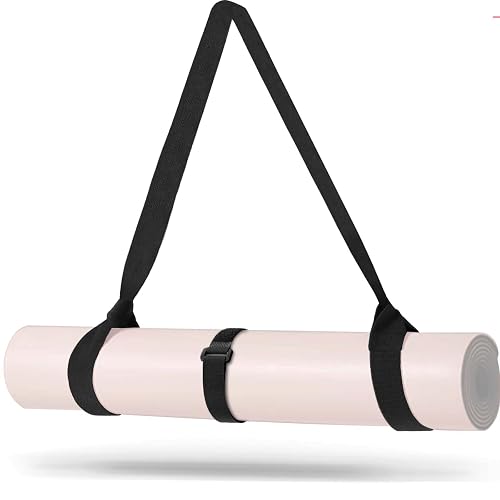
- Yoga mat strap: A simple carrying strap makes it easier to transport a thicker, heavier mat to class. View on Amazon
For more on how thickness fits into a full home setup, see What Is the Best Thick Yoga Mat for Home Practice? and 6 Best Yoga and Pilates Equipment for Home Workouts (2026).
FAQ
Is a thicker yoga mat always better?
No. Thicker mats add cushion for knees and hips, but they can reduce stability in standing and balance poses. The best thickness depends on your joints, your floor and your practice style.
What thickness is best for beginners?
Many beginners find a mat around 4 mm to 5 mm a practical middle ground, offering cushion without making balance work too unsteady. Try it on a few poses before deciding.
Does mat thickness affect balance?
Yes. Thinner mats keep you closer to the floor, which many people find easier for balance. Very thick mats can make standing poses feel less stable, especially on soft surfaces.
Can a thick mat help sore knees?
A thicker mat may reduce pressure during kneeling. If you have knee pain or a joint condition, talk with your doctor or physical therapist before changing your routine.
Should I use a mat on carpet?
You can, but carpet already adds softness. A very thick mat over carpet may feel unstable, so a thinner mat often works better on soft floors.
Conclusion
Choosing the right thickness comes down to balancing cushion and stability for your body, your floor and your style. Start with the ranges in this yoga mat thickness guide, then test a few poses to see what feels right. Revisit your choice as your practice changes, and check with a healthcare professional if you have joint concerns or an injury.
Ready to choose one?